Last updated October 15, 2026
Free written scope consultation - allowances, timeline, and change-order rules on paper before a single trade is scheduled
Construction Cost Breakdown: The Woodland Hills Homeowner’s Reference for 2026
A kitchen remodel quoted at $150 per square foot and one quoted at $300 per square foot in Woodland Hills can both be honest numbers. The difference is scope, materials, and a dozen line items that never make it into the headline price. What you’ll learn in this guide is how to read a real bid, line by line, so you can compare quotes on their actual contents instead of their totals. For more guides & resources on Woodland Hills remodeling, explore our blog. This reference breaks down construction costs for the three most common Woodland Hills projects and explains the local premiums that national averages never capture.
Quick Answer
In 2026, a mid-range kitchen remodel in Woodland Hills runs $45,000 to $85,000, a primary bathroom $18,000 to $40,000, and a room addition $250 to $450 per square foot depending on whether your lot sits in the Very High Fire Hazard Severity Zone. The gap between a low and a high bid almost always comes down to five line items: permits, fire-rated materials, structural work hidden inside walls, design fees, and the contingency reserve. A written bid that separates these costs is the only reliable way to compare quotes.
Styles & brands we work with
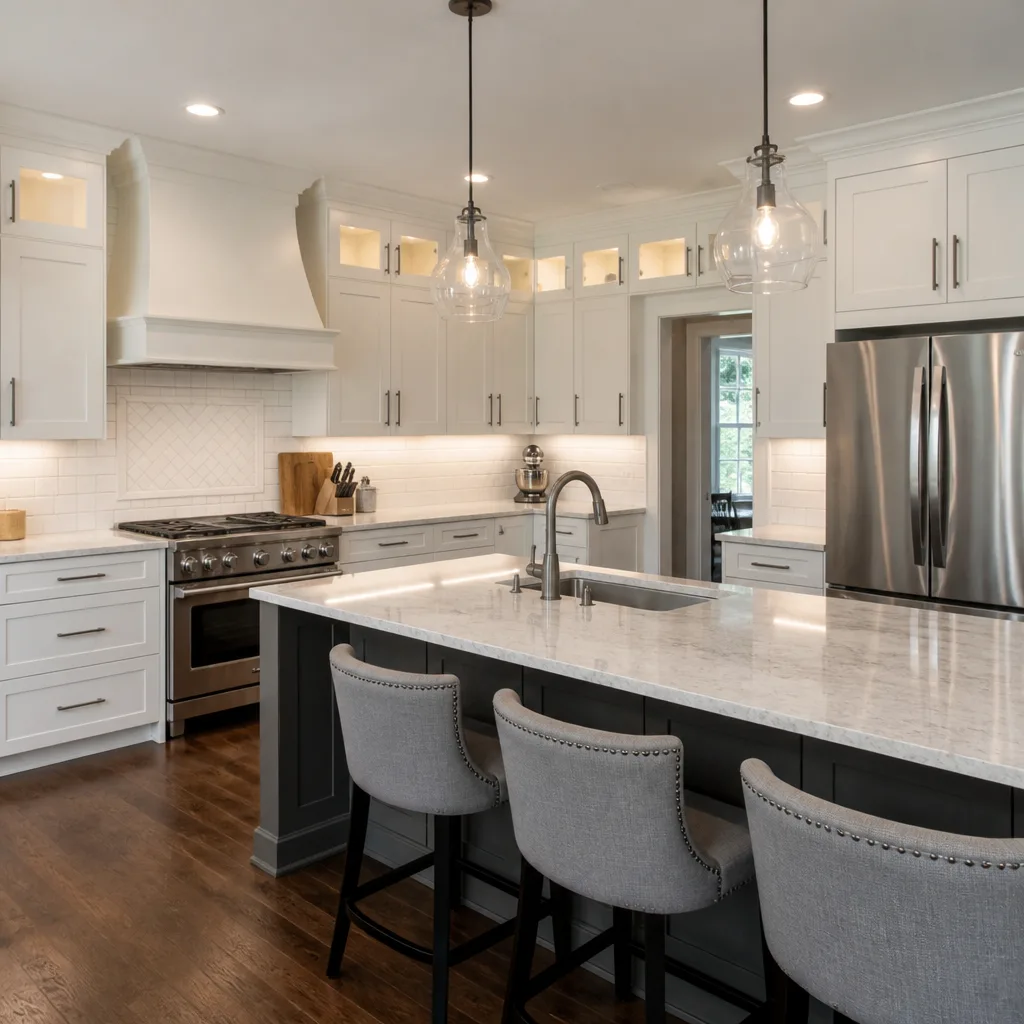
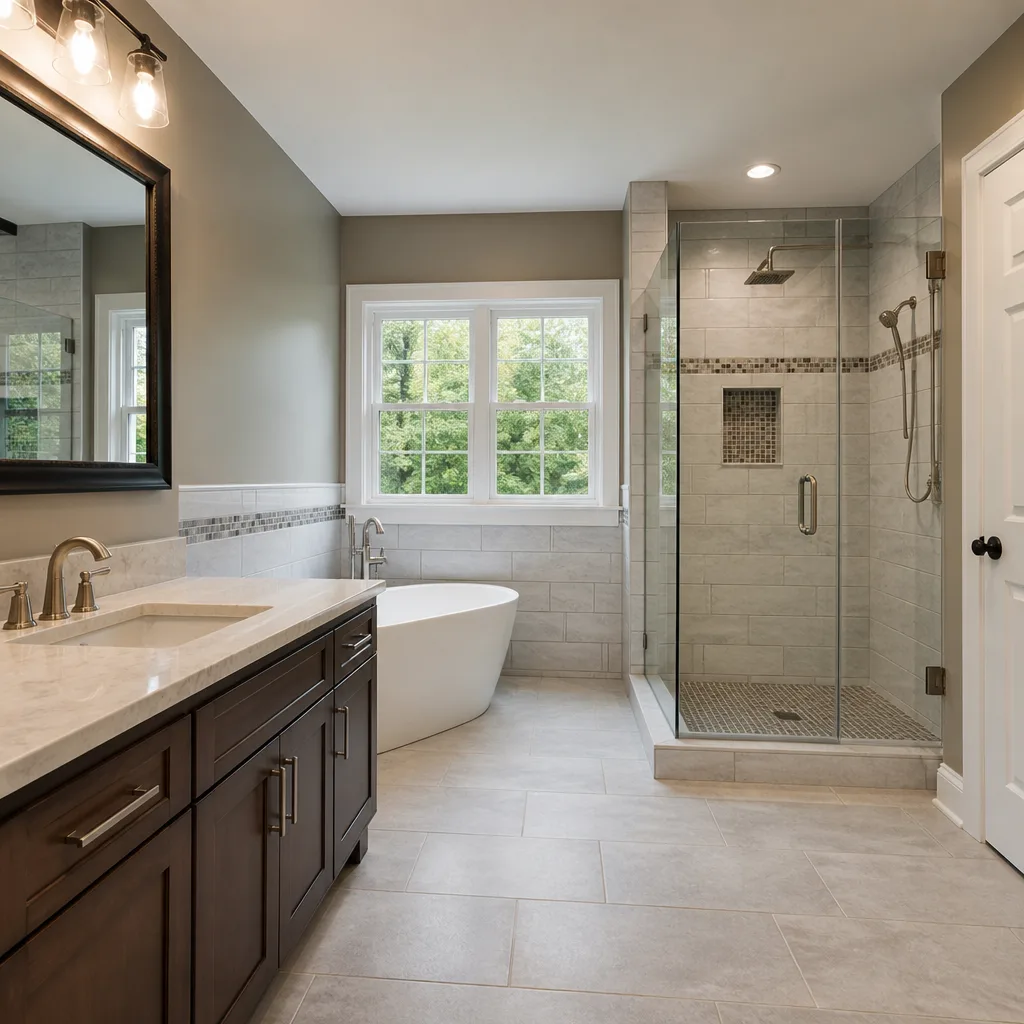
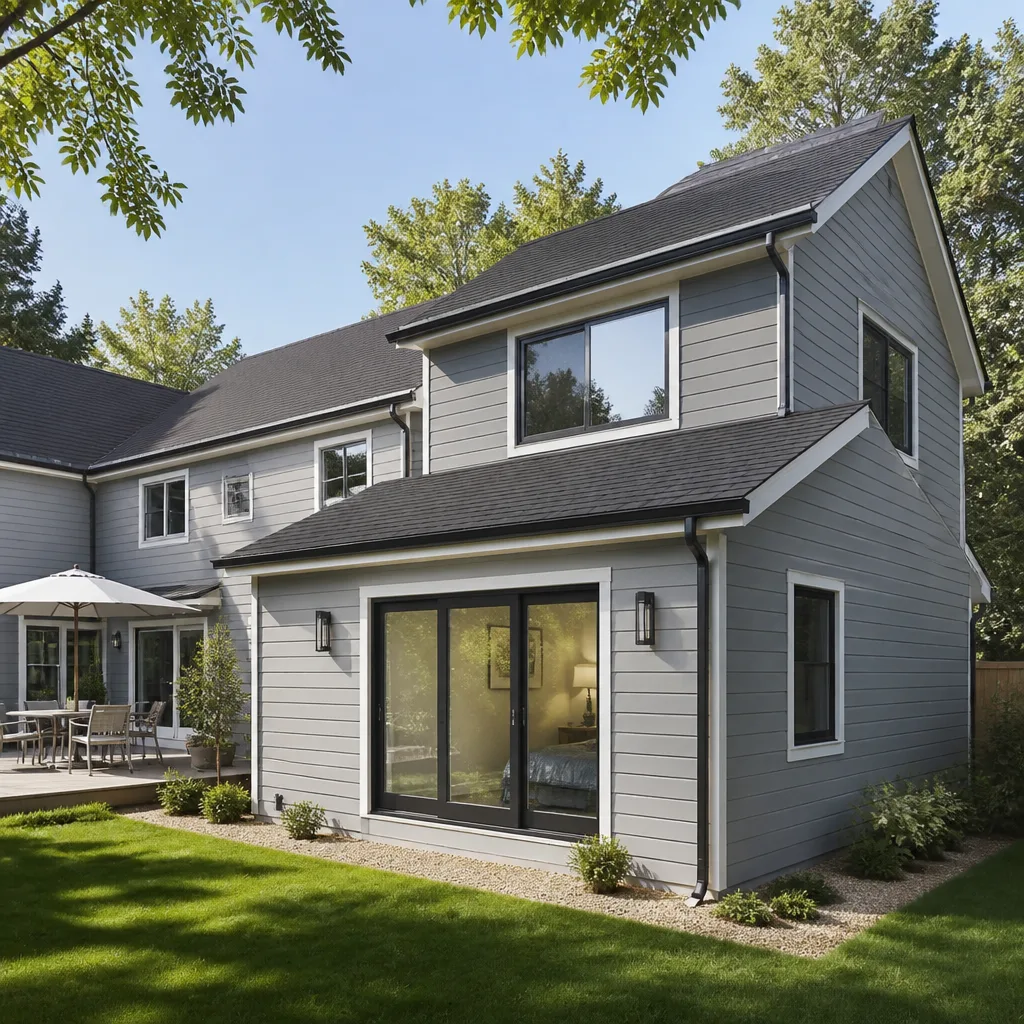
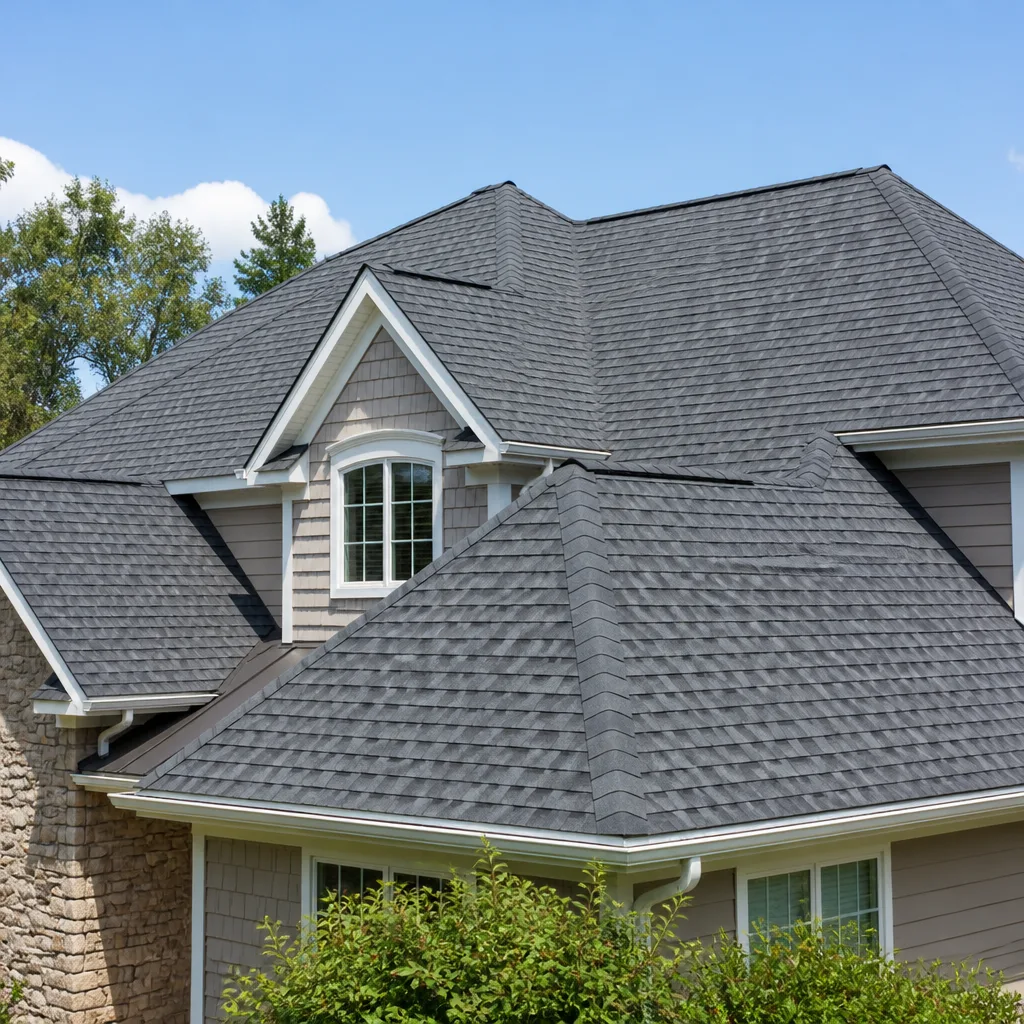
Table of Contents
- Line-Item Anatomy: What a Real Woodland Hills Bid Contains
- Kitchen Remodel Cost Breakdown: 2026 Ranges
- Primary Bathroom Cost Breakdown: 2026 Ranges
- Room Addition Cost Breakdown: What Drives the Square-Foot Price
- Woodland Hills Cost Premiums National Averages Miss
- Allowances: The Most Common Source of Over-Budget Surprises
- Licensed GC Versus Direct-Hire Subs: The Real Cost Difference
- How to Size Your Contingency Reserve Before Demo
Line-Item Anatomy: What a Real Woodland Hills Bid Contains
Every legitimate construction bid in Woodland Hills should break into the same five buckets. When a quote arrives as one number with no breakdown, you’re not comparing costs. You’re comparing marketing. Here’s what each bucket actually covers in 2026:
- Labor (40-55% of total): Hourly rates for carpenters, electricians, plumbers, tilers, and general labor. In Woodland Hills, skilled trade labor runs $75 to $150 per hour depending on the trade. The carpenter hanging your cabinets is not the same wage tier as the electrician wiring your island.
- Materials (30-40% of total): Everything from framing lumber to finish fixtures. This is the bucket with the widest swing because a Kohler faucet and a big-box store brand both install the same way but price two to four times apart.
- Permits and fees (2-6% of total): LADBS plan check fees, permit issuance fees, and any school district or utility fees that attach to the project. A kitchen remodel with a wall removal carries a different permit load than a fixture swap.
- Design and engineering (0-10% of total): Architectural drawings, structural engineering for load-bearing changes, and interior design time. Some projects in Woodland Hills require soil reports or hillside structural review, which pushes this bucket higher.
- Contingency and overhead (8-15% of total): The reserve against what’s found inside the walls, plus the GC’s project management and profit. A contractor who skips contingency on paper hasn’t made it disappear. They’ve just hidden where it will come from later.
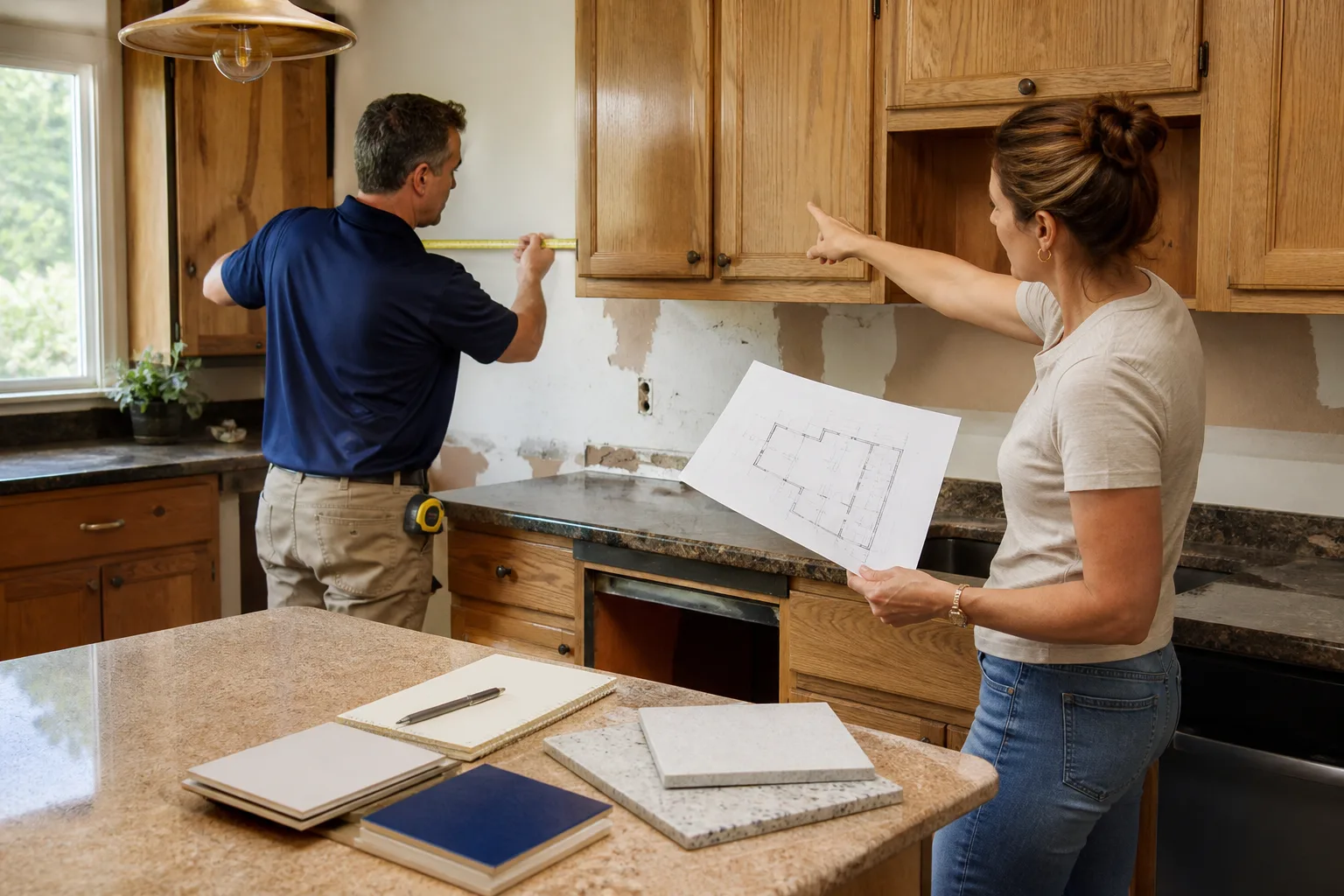
We’ve watched Woodland Hills homeowners reject the lower-priced of two bids because it didn’t include a permit line, then sign with the higher one that did. The lower bid wasn’t cheaper. It was incomplete. When you call for an estimate, ask the contractor to show you this structure in writing. If they won’t, keep looking.
For a deeper look at how a full home remodeling project in Woodland Hills gets scoped and priced before any work begins, see how we structure written proposals.
Kitchen Remodel Cost Breakdown: 2026 Ranges
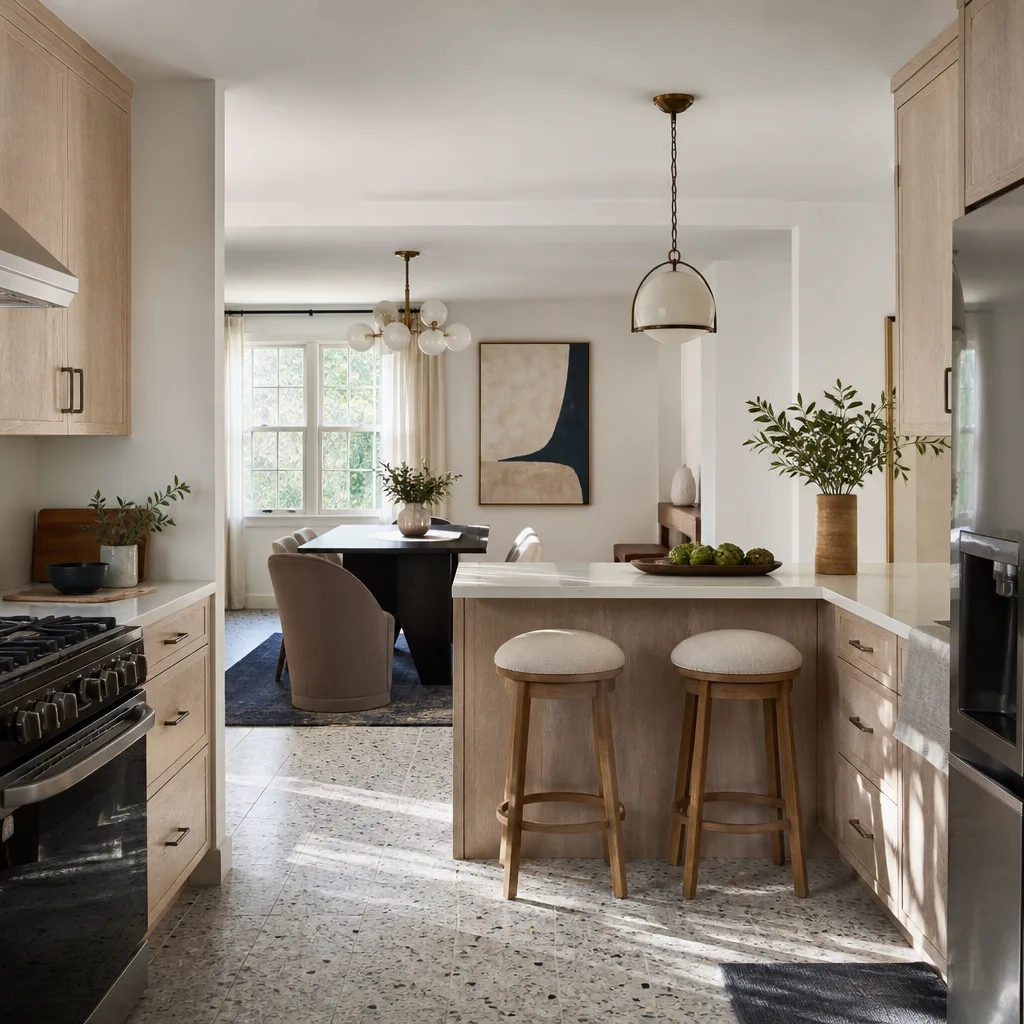
A mid-range kitchen remodel in Woodland Hills in 2026 lands between $45,000 and $85,000 for a 150 to 250-square-foot kitchen. That’s $185 to $340 per square foot, which is exactly the kind of range that makes the square-foot metric useless on its own. Here’s the line-item reality behind that number:
- Demolition and disposal: $2,500 to $6,000. Removing old cabinets, countertops, flooring, and possibly a non-load-bearing wall. Dump fees and haul-out labor are real costs that quotes sometimes bury.
- Rough plumbing and electrical: $5,000 to $15,000. Moving a sink location, adding a pot filler, relocating outlets, running a new circuit for an induction cooktop. If your home has aluminum wiring or a panel that needs upgrading, add $3,000 to $8,000.
- Cabinetry: $12,000 to $35,000. Semi-custom lines like KraftMaid or Wellborn land in the lower half of that range. Full custom built-ins in Woodland Hills can exceed $50,000 on a large kitchen.
- Countertops: $4,000 to $12,000. Quartz from Cambria or Silestone runs $75 to $150 per square foot installed. Natural stone pushes higher and adds maintenance.
- Flooring: $3,000 to $9,000. Porcelain tile, engineered hardwood, or luxury vinyl plank installed over a kitchen footprint. Leveling a sagging subfloor adds $1,500 to $4,000.
- Appliances: $6,000 to $25,000. This is the allowance trap we’ll get to later. A full suite from a mid-tier brand differs from a pro-grade lineup by a factor of four.
- Finish trim and paint: $2,000 to $5,000. Crown molding, baseboards, and a paint-grade or stain-grade finish.
The structural wildcard in Woodland Hills kitchens is the wall you want to remove. If it’s load-bearing, a beam installation with engineering runs $4,000 to $12,000. If it’s shear-critical due to earthquake code requirements, the engineering gets more involved and the price climbs accordingly.
We’d rather you know these ranges before you call. It means the conversation starts with what you actually want, not with sticker shock. Our team has been pricing kitchen work in Woodland Hills since 2004, and a Mason Remodeling Co Woodland Hills home consultation always includes a written price before any tool comes off the truck.
Primary Bathroom Cost Breakdown: 2026 Ranges
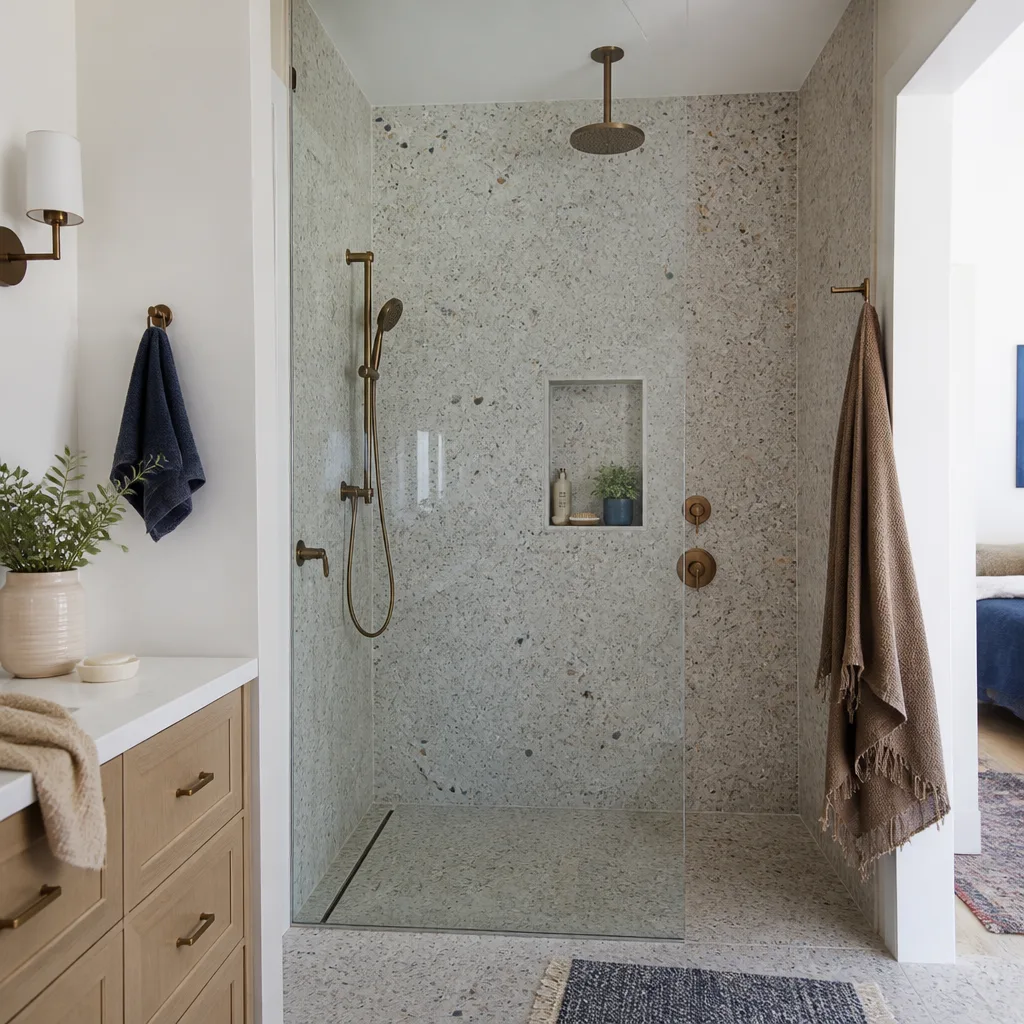
A primary bathroom remodel in Woodland Hills runs $18,000 to $40,000 in 2026 for a typical 50 to 100-square-foot space. At the upper end, a full gut with layout changes, curbless shower, and high-end tile can reach $60,000. Here’s what composes the cost:
- Demolition and waterproofing prep: $2,000 to $5,000. Removing the old tub or shower pan and stripping to the studs. The waterproofing system (Schluter membrane or equivalent, meaning the orange uncoupling layer that seals the shower walls and floor before tile) adds $1,500 to $3,500.
- Rough plumbing: $4,000 to $10,000. Moving a drain, converting a tub to a curbless shower, or adding a freestanding tub supply. Cast iron drain replacements in older Woodland Hills homes can add $2,000 to $5,000 if the stack is failing.
- Tile and stone work: $6,000 to $18,000. A custom tile shower with a bench, niche, and floor-to-ceiling coverage. Mosaic or large-format slabs run higher. The tile setter’s labor rate matters more than the tile price here.
- Vanity, countertop, and fixtures: $3,000 to $10,000. A Kohler or Moen fixture package runs $800 to $2,500. Toto toilets with washlet features add $1,000 to $3,500 per unit. The vanity itself can be a floating walnut custom piece at $4,000 or a semi-custom at $1,200.
- Glass shower enclosure: $1,800 to $5,000. Custom frameless glass doors are one of the most common areas where the quote climbs between estimate and order, usually because the opening dimensions change after tile.
- Exhaust fan and lighting: $800 to $2,500. A proper quiet-rated vent fan matters more than homeowners expect, especially in a bathroom that shares a wall with a bedroom.
What most national cost guides never mention is that Woodland Hills bathrooms in homes built before 1980 often have galvanized supply lines and unvented drain runs. When these show up during demo, the scope expands and so does the price. A written bid accounts for this possibility with an explicit contingency line rather than a vague “additional work may be required” note at the bottom.
If you’re thinking through a bathroom remodeling project in Woodland Hills, start with the waterproofing and plumbing questions before you fall in love with tile. That’s where the money goes and where failures cost the most to fix.
Room Addition Cost Breakdown: What Drives the Square-Foot Price
A room addition in Woodland Hills runs $250 to $450 per square foot in 2026. The range is wide because additions are where site conditions, fire-zone requirements, and structural engineering converge to produce wildly different bids for the same square footage. A 400-square-foot primary suite addition should land between $100,000 and $180,000. Here’s the breakdown:
- Foundation and site work: $15,000 to $45,000. Hillside lots often require caissons or a raised foundation system instead of a standard slab. If your property sits on expansive soil, a soils report and a more engineered foundation both add cost. Site access for equipment is a major variable. A lot where a concrete pump truck can’t reach the addition adds thousands in labor hours alone.
- Framing and roofing: $25,000 to $60,000. Lumber prices have stabilized since their 2021 spike but remain 20-30% above pre-2020 levels. Roofing material from GAF or CertainTeed runs $6 to $12 per square foot installed, with fire-rated underlayment required in some Woodland Hills zones.
- Rough mechanicals: $12,000 to $30,000. Running HVAC ducting or adding a mini-split, extending plumbing for a bath, and pulling new electrical from the panel. If your panel is at capacity, a service upgrade adds $4,000 to $8,000.
- Windows and exterior finishes: $8,000 to $25,000. Dual-pane, low-E windows sized appropriately for the addition. Exterior stucco repair and matching adds more than you’d expect if the existing finish is aged and needs to blend.
- Interior finishes: $30,000 to $70,000. Drywall, insulation, flooring, trim, paint, and any built-ins. This is where the finish level decision gets made. Builder-grade and custom-grade don’t live in the same price universe.
For additions in Woodland Hills, the single biggest cost variable is fire-zone compliance. If your property falls within the Very High Fire Hazard Severity Zone, exterior materials must meet specific ignition-resistant standards. A stucco exterior already meets most of them. A wood-sided addition does not, and the compliant alternative costs more.
A general contractor in Woodland Hills who pulls permits and manages the full addition means you get one point of accountability rather than six subcontractors you’re coordinating yourself. That coordination has real dollar value, which we’ll get into below.
Woodland Hills Cost Premiums National Averages Miss
National remodeling cost guides will tell you a mid-range kitchen runs $150 to $250 per square foot. They don’t tell you why most Woodland Hills bids land above that range. Here are the local factors that show up on our bids and rarely show up on a national calculator:
- VHFHSZ material upcharges (5-15% on affected exterior and structural materials): A large portion of Woodland Hills sits inside the Very High Fire Hazard Severity Zone. That means exterior wall assemblies, roof coverings, and sometimes decking must use ignition-resistant materials. A standard fir framing package won’t pass. The compliant product costs more, and the inspector will check.
- Hillside access surcharges ($1,500 to $8,000): Many Woodland Hills homes south of Ventura Boulevard sit on sloped lots with a single narrow driveway for all trade access. Material delivery requires a smaller truck or a hand-carry. Every extra hour of carrying material up a grade is a labor hour billed.
- LADBS permit fee structure (typically $1,500 to $6,000 for a mid-size remodel): The Los Angeles Department of Building and Safety calculates fees off project valuation formulas, and those formulas exceeded national benchmarks years ago. Plan check is a separate fee from permit issuance. A structural change to a load-bearing wall triggers additional review time and fees.
- Seismic and hillside structural requirements: Woodland Hills sits near the Northridge fault lines. Shear wall requirements, hold-down specifications, and hillside foundation engineering all exceed what a national cost guide assumes. A foundation retrofit tied to an addition can add $10,000 or more.
- Labor market reality: The San Fernando Valley trades market prices labor at a premium over national averages. A finish carpenter who works the Valley costs more per hour than the median rate national guides quote. That’s not gouging. It’s what experienced local labor costs.
These premiums are not markups. They’re the actual cost of building in this geography. A written bid should show them as line items. If you see a bid that prices the same as a national average with no local adjustments, the contractor hasn’t built in Woodland Hills long or is planning to absorb surprises later. Neither option ends well.
Allowances: The Most Common Source of Over-Budget Surprises
An allowance in a construction bid is a placeholder dollar amount for a material or finish that hasn’t been selected yet. It’s how contractors keep a bid moving before you’ve chosen your tile, fixtures, or appliances. Allowances are not inherently dishonest. But they are the single most common source of change orders, because when the allowance is too low for what you actually want, the difference becomes a change order on the back end.
Here’s the framework we recommend for converting allowance line items into firm numbers before you sign:
- Ask for a list of every allowance in the bid. If the quote says “appliances: $4,000 allowance” but doesn’t specify what that buys, flag it. A $4,000 allowance covers a basic four-piece suite. If you want a pro-style range and a built-in refrigerator, your real number is $15,000 to $20,000.
- Go price the actual items you want. Walk a showroom. Pick the exact faucet, the exact vanity, the exact appliance package. Write down real SKUs and real prices.
- Have the contractor convert the allowance to a firm price. Bring your selections to the bidding table. Tell the contractor to re-price the allowance line at the real cost of the named products. This removes the guessing game entirely.
- Accept firm pricing on everything except true unknowns. The only legitimate remaining allowances should be for items that can’t be known until demo, like the condition of the subfloor or the state of the plumbing under the slab.
In Woodland Hills, the most frequent allowance blowup we see is in appliance packages and plumbing fixtures. A homeowner signs a bid with a $6,000 fixture allowance, then selects a Grohe shower system and a Toto washlet and discovers the real cost is $11,000. That’s a $5,000 surprise that could have been resolved before the contract was signed.
Mason Remodeling’s written price policy extends to allowances. We specify exactly what each allowance includes and does not include, in writing, before work starts. When you know the real line items behind a bid, you can compare the actual job rather than the placeholder version of it.
Licensed GC Versus Direct-Hire Subs: The Real Cost Difference
Hiring a licensed general contractor to manage your Woodland Hills remodel costs more on the front end than hiring subcontractors directly, a tradeoff explored in our DIY vs Professional Construction: The Woodland Hills Homeowner’s Decision Guide. The GC’s line includes project management, coordination, scheduling, and overhead, typically 10-20% of the total. The direct-hire approach eliminates that line. On paper, direct-hire looks cheaper. In practice, it often isn’t. Here’s why:
- Coordination failures have real costs. A direct-hire homeowner becomes the general contractor. That means scheduling the demo before the electrician, the electrician before the drywaller, the drywaller before the painter. A single scheduling miss ripples through a week of labor. Trade professionals working direct for a homeowner don’t coordinate with each other. They leave and go to the next job, and you wait until they’ll return.
- Warranty gaps become finger-pointing. When a direct-hire tile fails six months after install, the tile setter blames the waterproofing, the plumber blames the tile setter, and you’re in the middle. A GC with a written guarantee has one accountable party. If it isn’t right, they make it right, because their name is on the entire job, not one trade.
- Pricing power moves against you. A general contractor who does six kitchens a year in Woodland Hills has standing relationships with local suppliers and specialty subs. They get priority scheduling and trade pricing. Homeowners get retail pricing and the open-market wait.
- You’ll pay for mistakes regardless. When a direct-hire sub makes an error, you pay to fix it either in money or in time spent managing the dispute. The GC’s management fee is, among other things, the cost of offloading that risk.
The right comparison isn’t “GC cost versus sub cost.” It’s “GC total cost versus sub total cost plus your unpaid project management time plus the cost of fixing what goes wrong without a written guarantee.” We’ve been the second contractor called after a direct-hire remodel went sideways in Woodland Hills more times than we can count, and the fix usually costs more than the GC fee would have from the start.
How to Size Your Contingency Reserve Before Demo
The contingency reserve is the money set aside inside a bid for what gets discovered when walls come down. In a 1960s Woodland Hills ranch, what’s inside the walls is usually one or more of the following: galvanized plumbing at end of life, aluminum wiring, cast iron drain stacks deteriorating from the inside, termite damage, or framing that doesn’t meet current seismic standards. A responsible bid includes a contingency line. The question is how much, and what happens to whatever is left over.
- For a kitchen remodel: reserve 8-12% of the total bid. The highest-probability discoveries are plumbing and electrical. A 1960s or 1970s home in Woodland Hills frequently has original galvanized supply lines that fail the moment you touch them to relocate a sink.
- For a bathroom remodel: reserve 10-15%. Water damage hides under tile and behind shower surrounds. Once the old pan comes out, rotten subfloor and damaged framing are common. The waterproofing and structural fix for a failing bathroom floor can run $3,000 to $8,000 once opened.
- For a room addition: reserve 5-10%. The unknowns here are below grade. Soil conditions, existing foundation interfaces, and drainage all get revealed during excavation. A geotechnical surprise on a Woodland Hills hillside lot can alter the foundation design and the price.
- Get the contingency mechanic in writing. Some contractors treat contingency as their own money, applied at their discretion without homeowner approval. We specify that contingency funds are only spent on approved scope changes, at approved prices, with the homeowner’s sign-off before the work proceeds.
- Any unspent contingency stays with you. This should be stated in the contract. The contingency is a reserve, not a tip. Whatever isn’t needed reverts to the owner at project closeout.
The line items most likely to grow once walls are open, in order of frequency in Woodland Hills homes built before 1985, are: plumbing supply repiping, electrical panel safety remediation, subfloor replacement, and termite repair. Building your contingency to match the age and condition of your home is the difference between a controlled project and a cascading budget.
Common Mistakes to Avoid
- Comparing bids on total price alone. A $60,000 kitchen bid with permits, written allowance specs, and a contingency line is a fundamentally different purchase than a $52,000 bid with none of those. You’re comparing an incomplete scope to a complete one.
- Assuming the allowance numbers in a bid reflect your actual taste. Allowances are placeholders. If the tile allowance is $6 per square foot and you selected a $22 per square foot porcelain, the gap becomes a change order. Price the real selections before signing.
- Ignoring the fire-zone line item. In Woodland Hills VHFHSZ areas, your material choices are constrained by code. If the bid doesn’t mention ignition-resistant materials and your addition is wood-sided, the bid won’t pass plan check.
- Skipping the written contingency mechanic. Some contractors don’t include a contingency and then issue change orders freely. Others include one and never explain who controls it. Get it in writing: what triggers it, who approves it, and what happens to the remainder.
- Assuming square footage pricing tells you anything about your project. Two identical 200-square-foot kitchens can differ by $40,000 based on structural scope, material level, and code compliance. Cost per square foot is a marketing number, not a bid metric.
- Not asking about the guarantee before you sign. A one-year craftsmanship warranty with clear terms is worth real money when something fails after closeout. Know what’s covered, what’s excluded, and for how long, before the first payment clears.
See the difference
 Before
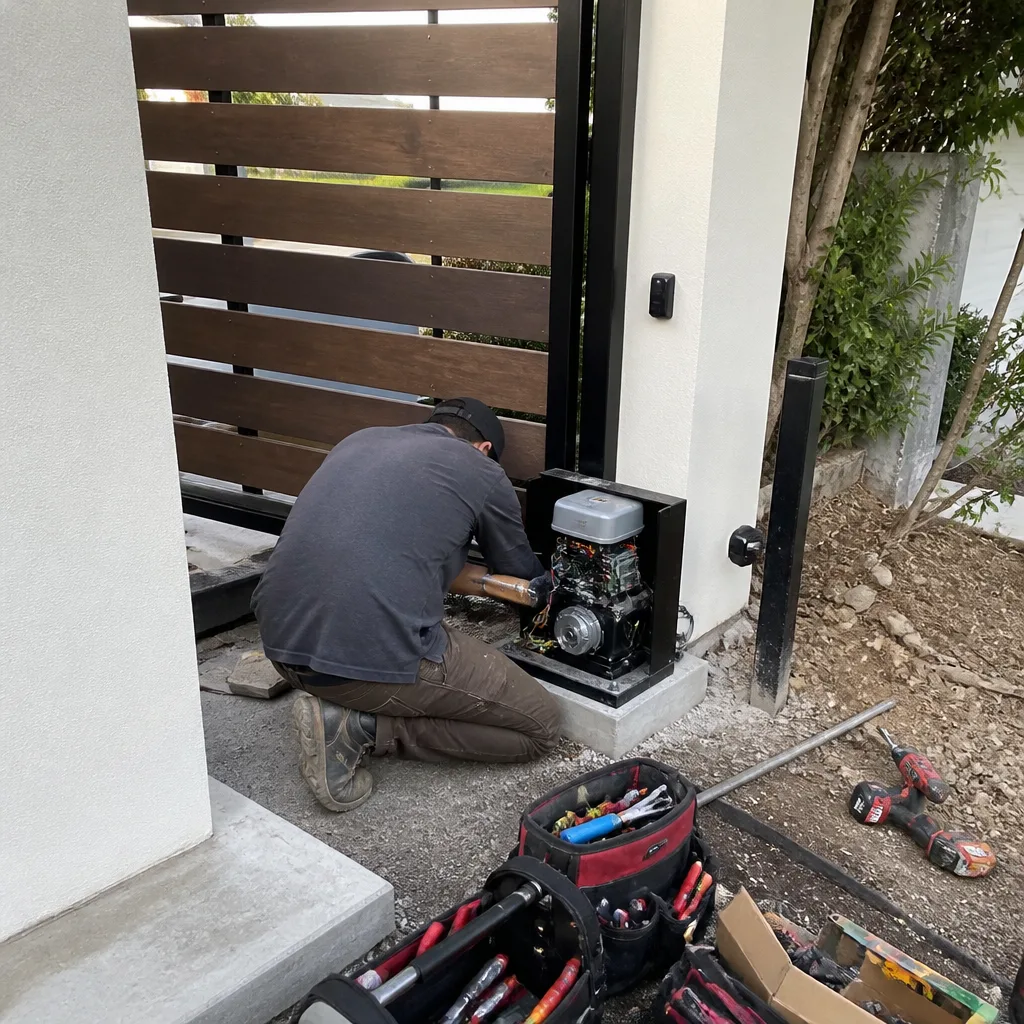 After
After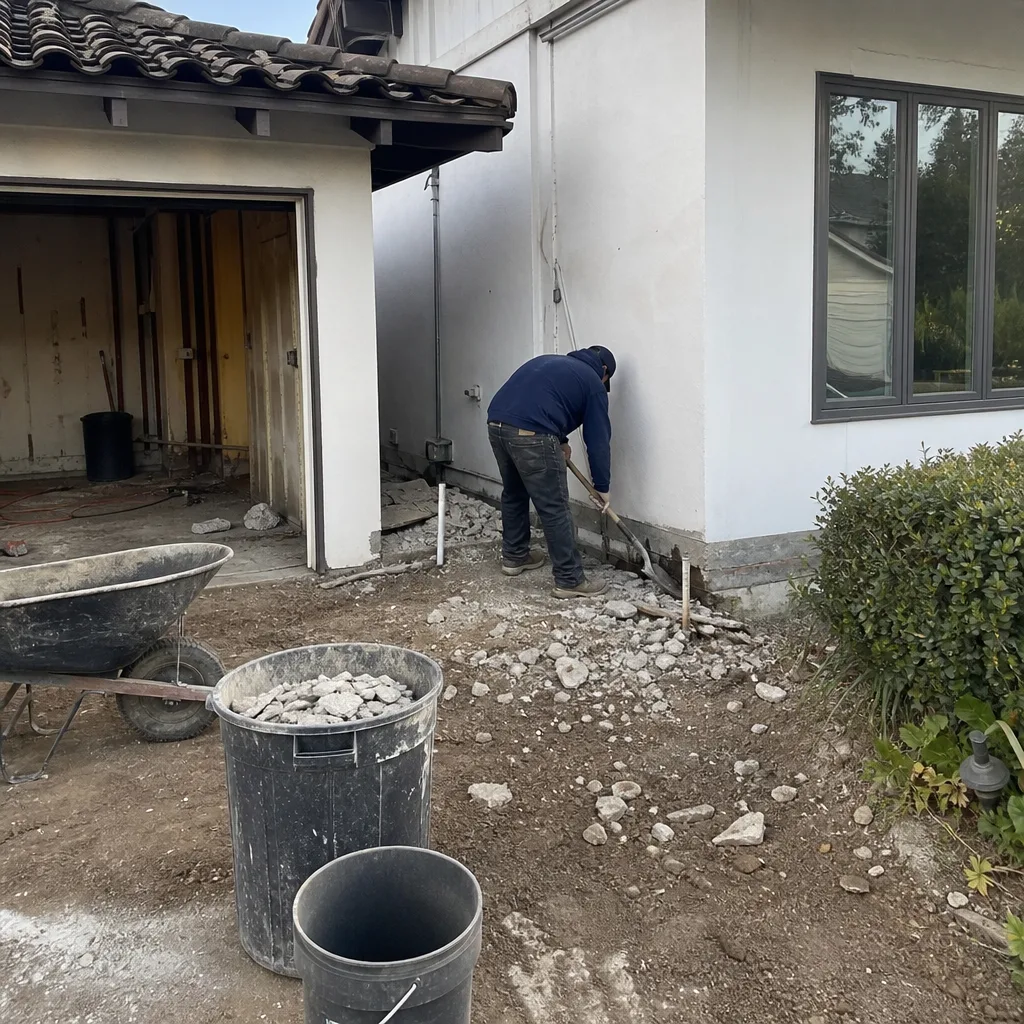 Before
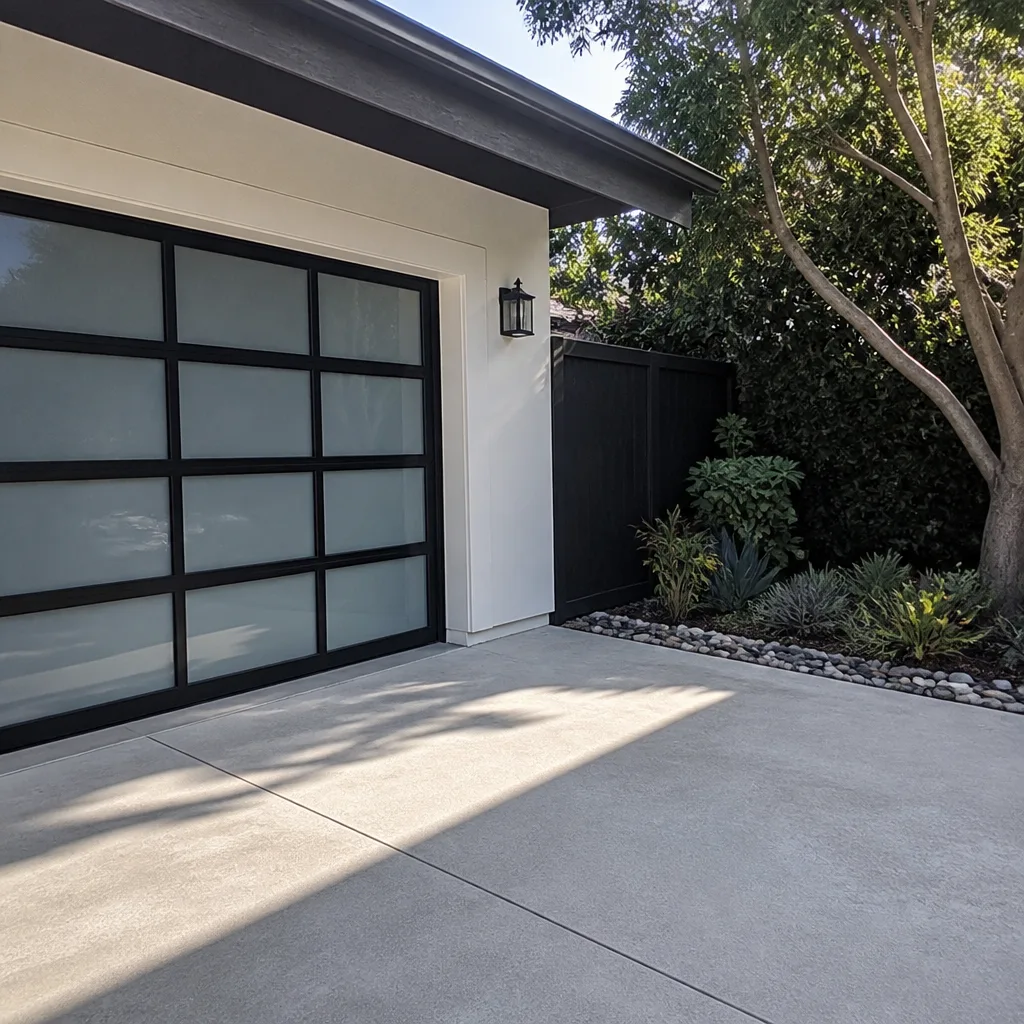 After
After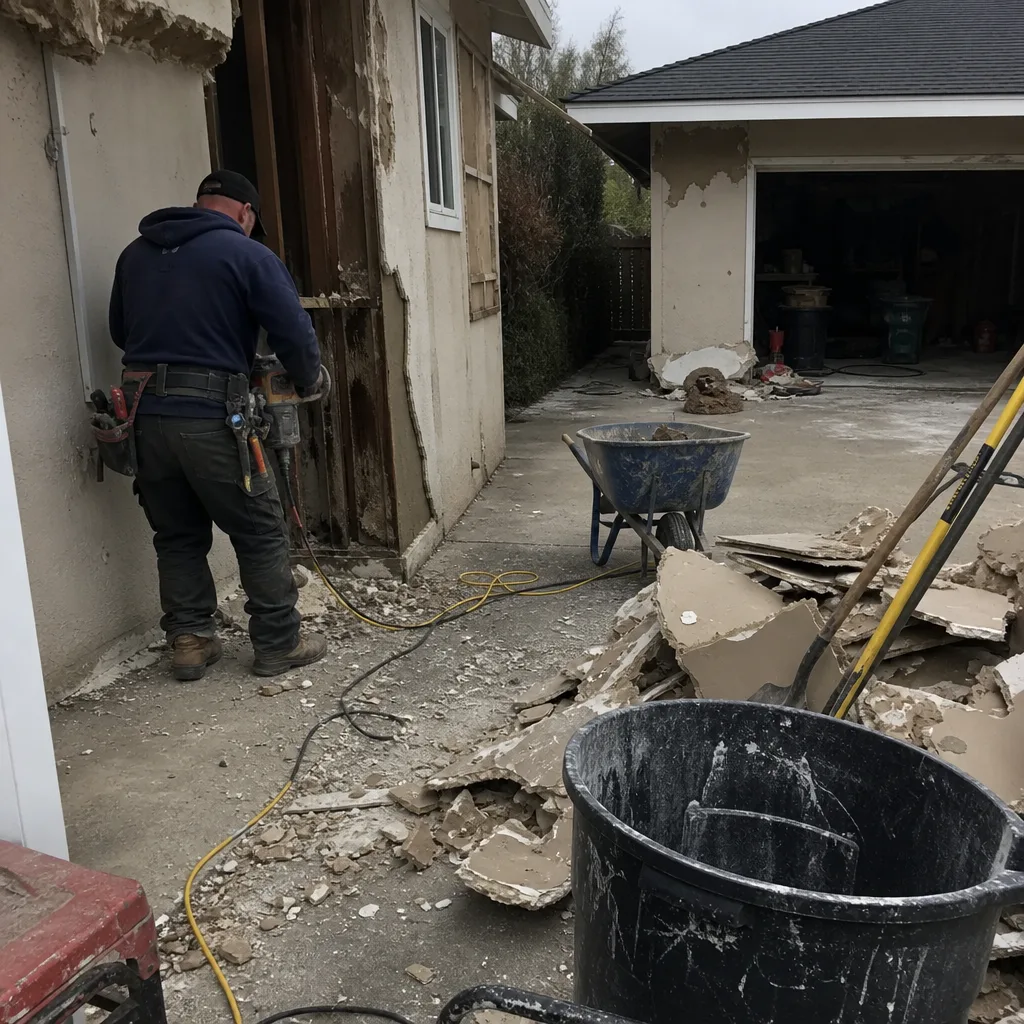 Before
 After
AfterWhen to Call a Professional
Any project that moves a wall, touches the plumbing stack, alters the roofline, or adds square footage in Woodland Hills needs a licensed general contractor who pulls permits and coordinates the trades. If your bid includes a load-bearing wall removal, a panel upgrade, sewer line work, or hillside foundation changes, you’re past the point where a direct-hire approach makes sense. The risk of a sequencing error or a code miss gets expensive quickly. Mason Remodeling Co Woodland Hills offers free estimates in Woodland Hills, call (831) 290-6866 and we’ll put a written price in your hands before any work starts.
Frequently Asked Questions
A mid-range kitchen remodel in Woodland Hills runs $45,000 to $85,000 in 2026, with the final number driven by cabinet grade, appliance selection, and whether you’re moving walls or plumbing. The per-square-foot range of $185 to $340 reflects how different scopes can legitimately price. Call (831) 290-6866 for a written line-item quote on your specific kitchen.
If your Woodland Hills property falls in the Very High Fire Hazard Severity Zone, your exterior materials, roof covering, and sometimes deck framing must meet ignition-resistant standards set by Los Angeles County fire code. The compliant material package typically costs 5-15% more than standard options. A contractor who builds in Woodland Hills regularly will flag this early in the bidding process rather than discovering it at plan check.
LADBS permit fees for a mid-size remodel in Woodland Hills typically run $1,500 to $6,000, covering plan check and permit issuance. Structural changes, additions, and any work in a hillside zone push toward the upper end of that range. Permit costs should appear as a separate line item on any bid you receive.
For a home built before 1980, reserve 8-15% of the total bid as contingency, with bathrooms at the higher end due to hidden water damage potential. The most common discoveries in older Woodland Hills homes are galvanized plumbing at end of life, aluminum wiring, and cast iron drain stacks that fail when disturbed. Your written bid should specify who controls the contingency and what happens to unspent funds.
A general contractor’s management fee of 10-20% buys licensed coordination, trade relationships, and a single accountable party with a written guarantee. Direct-hire saves the fee but transfers scheduling, warranty disputes, and fix-it responsibility to you. When a direct-hire remodel goes wrong, the repair cost usually exceeds what the GC fee would have been from the start. For exact pricing on your project, call (831) 290-6866 for a free estimate.
Ask your contractor to show you exactly what each allowance buys in real, named products at real local prices. An appliance allowance of $4,000 means basic, not premium. If you know you want a pro-style range and built-in refrigeration, price it before signing and have the contractor convert the allowance to a firm number. A written bid should never leave you guessing what an allowance covers.
The Bottom Line
Construction costs in Woodland Hills in 2026 range from $45,000 to $85,000 for a kitchen, $18,000 to $40,000 for a primary bath, and $250 to $450 per square foot for additions. The number everyone remembers is square footage, and it’s the least useful figure in the bid. What matters is whether the quote shows you a real line-item structure: labor, materials, permits, design, and contingency, each priced in writing. Local premiums from fire-zone materials, hillside access, and LADBS fees are real costs, not markups. And allowances are placeholders, not promises. A written bid that converts placeholders to firm prices, spells out the contingency mechanic, and comes with a stated guarantee is the only version worth comparing.
Written by Isaac Pruett, Owner at Mason Remodeling Co Woodland Hills, serving Woodland Hills since 2004.