Last updated October 15, 2026







Free written scope consultation - allowances, timeline, and change-order rules on paper before a single trade is scheduled
Construction Warning Signs: A Woodland Hills Homeowner’s Reference Guide
The most reliable predictor of a construction dispute isn’t the contractor’s review profile, warranty language, or even their portfolio. It’s whether they handed you a written, itemized price before any work began. Contractors who resist putting numbers on paper before demo day are, in our experience across Woodland Hills and the wider San Fernando Valley, far more likely to generate change orders that double the original bid. This guide teaches you to read contractor behavior in the first 72 hours, because those three days tell you more than any contract ever will. We’ll show you the red flags that matter, the ones most guides miss, and what to do when you spot them. For a step-by-step approach to hiring a construction contractor in Woodland Hills, see our companion guide.
Styles & brands we work with



Quick Answer
The biggest construction warning signs in Woodland Hills are behavioral, not structural: no written price before work starts, crew members who don’t match who you were told to expect, cash-only payment requests, and contract clauses that let the contractor decide when the job is “done.” A contractor who verifies crew identity, puts the price in writing, and guarantees work for a full year is the exception, not the rule. That standard exists in Woodland Hills, and it’s worth holding out for.
Table of Contents
- Warning Signs in the Bidding Phase
- Who Shows Up: Verification and the Bait-and-Switch
- On-Site Red Flags During Active Construction
- Contract Language That Should Stop You Cold
- How to Pause Work Legally in California
- Woodland Hills Specifics: Climate, Code, and Market Realities
- Common Mistakes to Avoid
- When to Call a Professional
- Frequently Asked Questions
- The Bottom Line
Warning Signs in the Bidding Phase
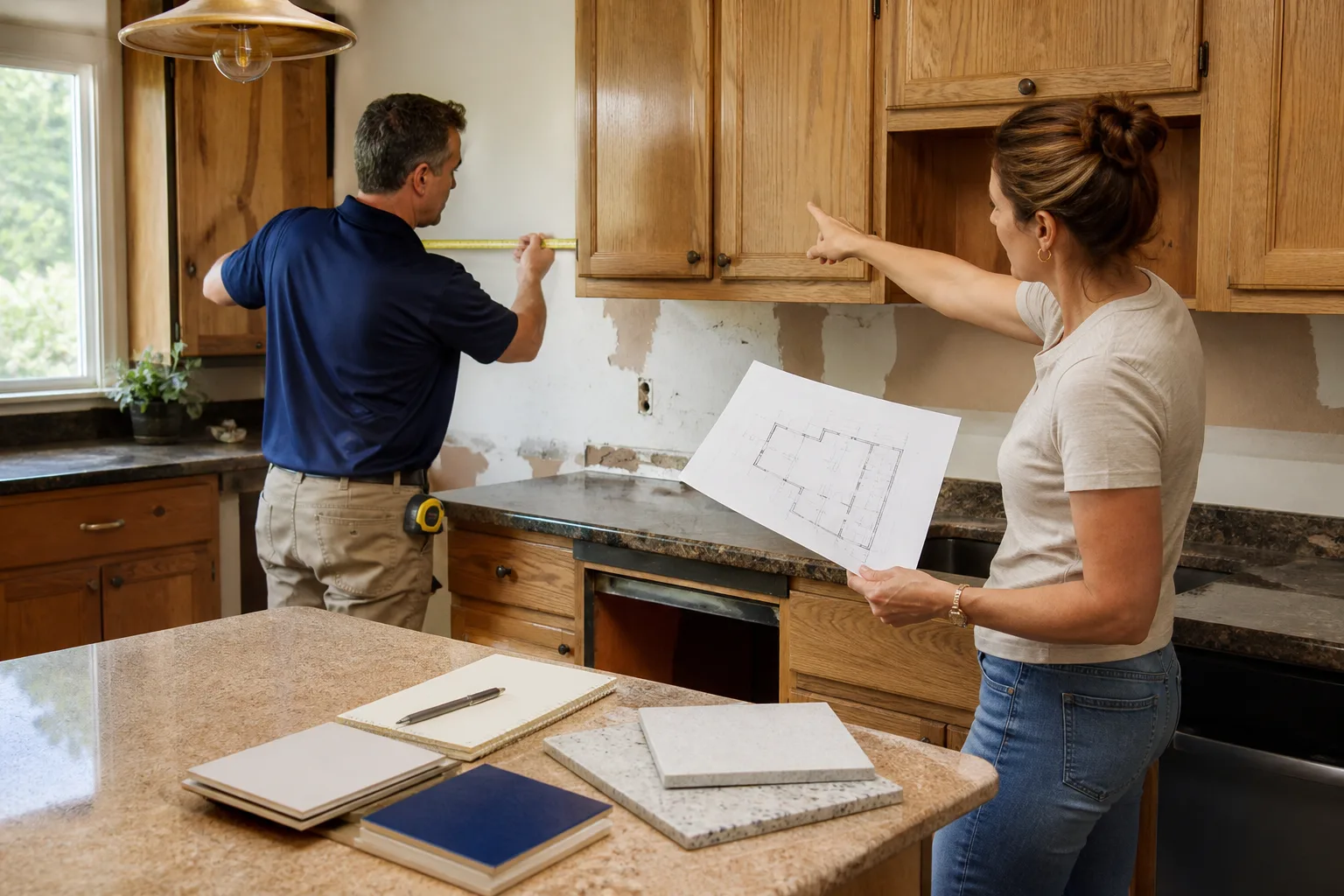
The first warning sign appears long before a hammer swings, and it’s almost always about how the bid is presented. A legitimate contractor in Woodland Hills will put a written, itemized price in your hands before asking for a signature. A contractor who wants to keep things verbal is doing so for a reason, and that reason is never in your favor.
Here’s what we’ve seen play out in Woodland Hills kitchens, baths, and whole-home projects over the years. A homeowner gets three bids. Two are written, detailed, and line-itemed. One is verbal, or it’s a single number scrawled on a business card, with a promise to “work out the details later.” The homeowner picks the verbal one because it’s lower. Six weeks later, the project is paused, the contractor is asking for $14,000 more, and there’s no paper trail showing what was originally promised. The low number was never real. It was a door-opener.
- Vague scope language. “Complete bathroom remodel” is not a scope. “Demo existing 5×8 bathroom to studs, relocate shower valve 18 inches north, install new 60-inch acrylic tub, tile surround to ceiling, new 36-inch vanity with Cambria quartz top, new Kohler fixtures, new exhaust fan vented to exterior, paint walls and ceiling” is a scope. If the bid doesn’t specify what’s included, everything becomes a change order later.
- Verbal price adjustments. Any contractor who says “I can do it for less if we skip the paperwork” is telling you exactly who they are. There is no legitimate reason to avoid a written price. None.
- Pressure to sign before other bids arrive. A contractor who wants your signature before you’ve compared numbers is not confident in their number. They’re confident in your inexperience. Take the time. A good contractor will wait.
- Requests for cash payment. Cash payments are a red flag for several reasons: no paper trail, no credit card protection, and often no invoice. In California, contractors can ask for a down payment, but legitimate operations accept check, card, or bank transfer. Cash-only is a signal that the contractor may be operating outside normal legal and tax channels.
The bidding phase is where you learn the most about a contractor, and it costs you nothing to walk away. A written price before any work starts is not a favor, not an upgrade, and not negotiable. At Mason Remodeling Co Woodland Hills home, we deliver a written price on every project before a single tool is unpacked. It’s the standard, not an exception.
Who Shows Up: Verification and the Bait-and-Switch
You vetted the company. You checked the license, read the contract, and liked the project manager who came to your Woodland Hills home for the estimate. Then the work starts, and the crew at your door is not anyone you’ve ever met. This is the bait-and-switch subcontractor situation, and it’s one of the most common complaints in residential construction in Los Angeles County.
Here’s how it usually works. A general contractor sells you on their experience and their name. Then they sub the job out to the lowest bidder, often a crew they’ve never worked with before. The people in your home may not be background-checked, may not be licensed, and may not even speak enough English to communicate a problem. You’re not getting the company you paid for. You’re getting whoever was available that week.
What to look for:
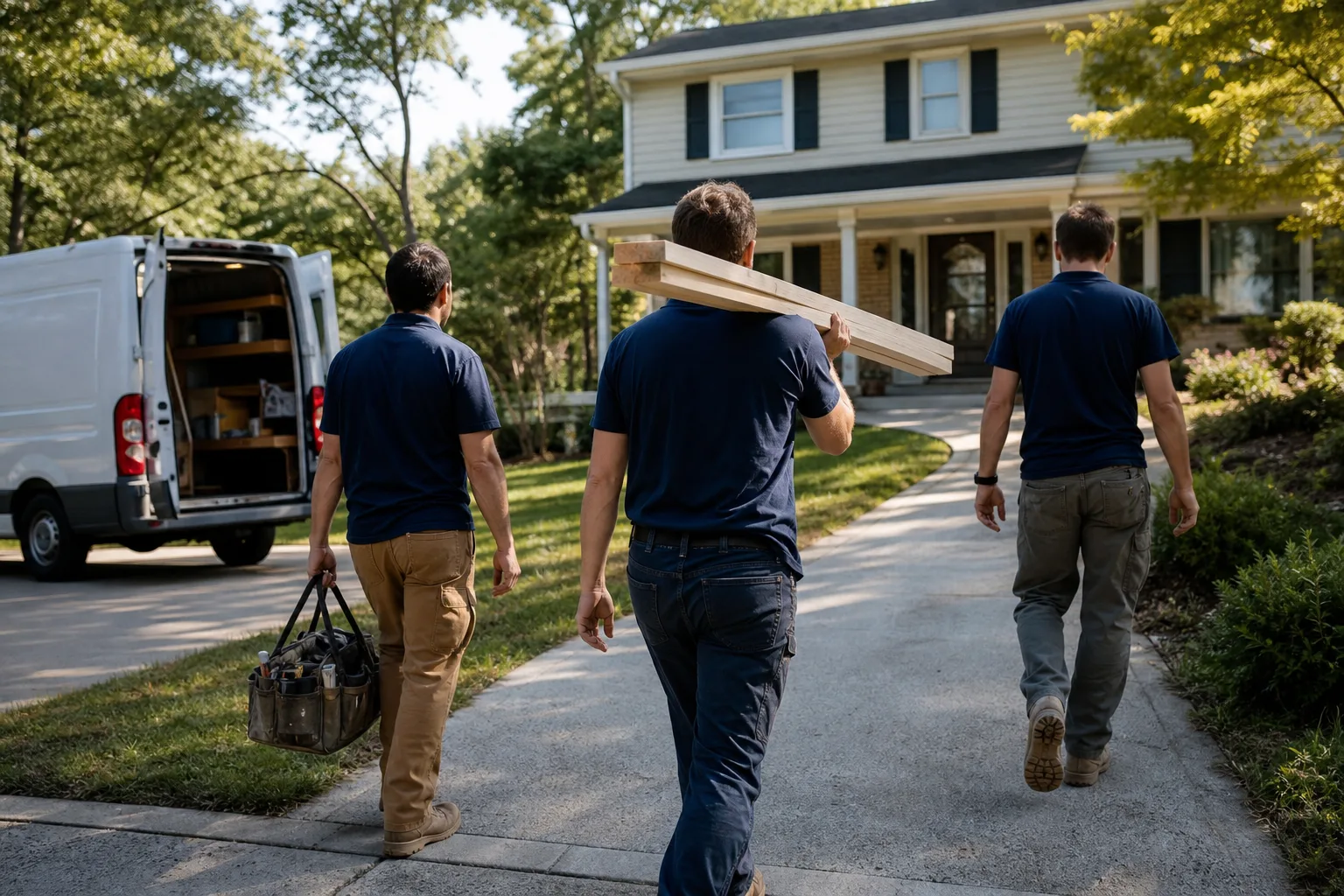
- No identification. Every worker on your property should be able to produce a photo ID. If they can’t, or won’t, that’s a problem. In our company, every crew member is identity-verified through The Threshold Standard, and homeowners receive the technician’s name and photo before the visit. At the door, the technician shows a photo ID badge. You should know exactly who is walking into your home.
- No uniform or unmarked vehicles. This one is easy to overlook. A crew that shows up in unbranded trucks and street clothes may be perfectly skilled, or they may be day laborers picked up that morning. You have no way to know. A uniform isn’t vanity. It’s accountability.
- Different company name on the paperwork. If the contract says one company name and the crew’s truck says another, ask why. Subcontracting is legal in California, but you have a right to know who is actually doing the work and whether they’re licensed and insured.
- The project manager disappears after signing. You signed with a company. If the person who sold the job vanishes after the deposit clears and you’re left managing a rotating cast of strangers, that’s a structural problem, not a scheduling hiccup.
This matters more in Woodland Hills than in many other markets. Homes here are often empty during the workday. Homeowners, including older adults and parents with young children, may be home alone. Opening the door to a stranger is a genuine safety decision. You should know the name and face of every person who enters your home before they arrive. If a contractor can’t or won’t provide that, choose a different contractor. Our Home Remodeling in Woodland Hills guide covers the verification process in more detail.
On-Site Red Flags During Active Construction
Once work is underway, the warning signs shift from paperwork to behavior. Some of these are obvious. Some are subtle. All of them are worth acting on immediately, because a small problem caught early is a one-day fix, while a small problem ignored becomes a five-figure repair. Staying on top of these issues is part of why we created our General Contractor Maintenance Checklist for Woodland Hills Homeowners.
The most dangerous on-site red flag in Woodland Hills is work proceeding ahead of permit approval. California law is clear: you can’t start construction before the permit is issued. Some contractors will “get started” while the permit is “in process,” especially on interior work that neighbors can’t see. If an inspector shows up to a job with no permit posted, the work gets red-tagged, which means it stops. You may then face fines, double permit fees, and months of delay. Ask to see the permit before the first day of work. If it’s not there, don’t unlock the door.
Other red flags we’ve seen on Woodland Hills job sites:
- Materials left exposed during rain windows. Woodland Hills gets most of its rain between November and March, and it can come hard. Lumber, drywall, and subfloor left uncovered on an active roof tear-off or room addition will absorb moisture, warp, and grow mold. A professional crew tracks the forecast and covers materials every night. If you see bare plywood under an open sky with rain in the forecast, say something.
- Skipped inspections. In Los Angeles, you’ll have inspections at specific milestones: foundation, rough framing, rough electrical, rough plumbing, insulation, final. If the contractor is burying work behind drywall before the inspector has signed off, that’s a serious violation. You can’t inspect what you can’t see. And you shouldn’t have to tear out finished work to prove it was done right.
- Unlabeled or mismatched materials. If you specified Belgard pavers for the back patio and a different brand shows up on the pallet, that’s not a substitution. That’s a problem. Check the labels. A reputable contractor uses specification-grade materials and can show you the receipts.
- No porta-potty or worksite cleanliness plan. This sounds minor. It isn’t. A crew that doesn’t plan for basic sanitation is a crew that doesn’t plan, period.
One more thing we see specifically in the hills: slope and drainage issues. Many Woodland Hills properties sit on graded terrain. If a contractor is digging, trenching, or adding square footage without addressing drainage, the first winter storm can send water into your foundation. A good general contractor knows this. A bad one finds out in January when you call them about the water in your garage.
If you’re planning a major build, our General Contractor in Woodland Hills guide walks through the full scope of what a responsible GC should handle.
Contract Language That Should Stop You Cold
Most homeowners read the price and the timeline, and skim the rest. The trouble lives in the rest. California contract law gives you rights, but those rights can be signed away in fine print if you’re not careful. Here are the clauses we tell every Woodland Hills homeowner to flag before signing anything.
“Substantial completion” defined by the contractor. This is the single most common contract trap in residential construction. The contract says the contractor is entitled to final payment upon “substantial completion.” But who decides what substantial means? If the contract doesn’t define it, the contractor does. That means they can declare the job done when the tile is set but the grout isn’t sealed, the paint is one coat short, and the toilet isn’t installed. Define completion yourself: every item on the scope, finished to code, inspected, and signed off. Get it in writing.
Missing lien waiver provisions. In California, subcontractors and suppliers can file a mechanic’s lien against your property if the general contractor doesn’t pay them, even if you’ve already paid the GC. A proper contract includes conditional and unconditional lien waivers at every payment milestone. These waivers say, in effect, that the sub has been paid for work completed to date. Without them, you can pay your contractor in full and still face a lien from the tile guy. This is a true horror story, and it happens in Woodland Hills every year.
Arbitration clauses that eliminate your right to court. Many contracts include mandatory arbitration. That’s not inherently bad, but you need to read the terms. Some arbitration clauses require you to waive your right to a jury trial or class action, require you to pay the arbitrator’s fees upfront, or choose an arbitrator with ties to the construction industry. In California, you have a right to a contractor’s license bond claim and to file a complaint with the Contractors State License Board. Don’t sign away rights you might need.
No written guarantee. If the contract doesn’t include a written guarantee with clearly stated terms, including what’s covered, what’s excluded, and for how long, you’re relying on a handshake. Handshakes don’t hold up in court. At Mason Remodeling, every completed project carries a written guarantee, and our 365-Day Done Right Promise means that if the work isn’t right within a year of completion, we make it right at no cost to you. That’s not marketing language. It’s in the contract.
How to Pause Work Legally in California
You’ve spotted a warning sign mid-project. The crew that showed up isn’t the crew you vetted. The work is proceeding without a permit. Materials are wrong. What do you do? Most homeowners freeze, because they’re afraid that pausing work means voiding the contract or forfeiting payments. It doesn’t. California law gives you specific rights, and you should use them.
Here’s the step-by-step process we recommend to any Woodland Hills homeowner who needs to hit pause:
- Document everything. Photos, videos, timestamps, screenshots of texts. If the wrong crew showed up, photograph their vehicles and any visible identification. If materials are exposed to rain, photograph that too. You are building a record. Do it calmly and thoroughly.
- Put the pause in writing. Send an email or text to the contractor that says, in plain language, “I am pausing work as of [date] due to [specific reason]. Please do not schedule crews until we have resolved this in writing.” Do not rely on a phone call. Written notice is your protection.
- Request the contract’s dispute resolution process. California law requires home improvement contracts over $500 to include a notice of your right to cancel and a description of the dispute resolution process. Use it. If the contractor refuses to engage, document that too.
- Contact the Contractors State License Board (CSLB). The CSLB is the state agency that regulates contractors. If the contractor is unlicensed, working without a permit, or violating contract law, the CSLB can investigate, issue citations, and in serious cases, suspend a license. You can file a complaint online.
- Do not pay for work not completed. California law allows you to withhold payment for incomplete or defective work, within reason. Pay for what was actually done, if anything, but do not pay ahead of schedule. A contractor who demands full payment for half a job is confirming your suspicion.
- Get legal advice if the amount is significant. If the project is over $25,000, or if the contractor has threatened a lien, talk to a construction attorney. A few hundred dollars in legal fees now can save you tens of thousands later.
Pausing work is not failure. It’s the responsible move when something is wrong. A good contractor will treat a pause as an opportunity to make things right. A bad one will threaten, bluster, and demand payment. The response tells you everything.
Woodland Hills Specifics: Climate, Code, and Market Realities
Woodland Hills is a specific place with specific construction realities. What works in Santa Monica won’t necessarily work here, and a contractor who treats the 818 like the 310 doesn’t understand this market. Here’s what you should know as a Woodland Hills homeowner.
Climate. Woodland Hills is one of the hottest neighborhoods in Los Angeles. Summer temperatures regularly exceed 100 degrees. That heat affects everything: paint requires different application timing, roofing materials expand and contract more dramatically, and certain flooring adhesives fail in high heat. A good contractor schedules heat-sensitive work for early morning and selects materials rated for the temperature swings. A bad one slaps on whatever’s on the truck and hopes for the best. By September, the hope is gone.
Rain. The flip side is winter rain. Woodland Hills sits in a drainage basin, and many homes sit on slopes. Heavy rain moves fast. If your contractor is doing foundation work, retaining walls, or drainage, the timing matters. A project that leaves a hillside exposed between November and March is a mudslide risk. This is not theoretical. It’s a real threat in the Winnetka and Topanga-adjacent neighborhoods.
Code and permits. Woodland Hills is part of the City of Los Angeles, which means LA Department of Building and Safety (LADBS) permits and inspections. LA’s building code is strict on seismic retrofitting, especially for hillside homes and any home built before 1980. If you’re doing a major remodel, expect a seismic evaluation. If you’re adding a retaining wall over three feet, expect an engineered design. A contractor who tells you permits will “slow things down” or “aren’t really needed for this” is advising you to break the law on your own property.
Market realities. Woodland Hills construction costs run higher than the LA average, driven by hillside access, older housing stock, and high demand. A realistic bathroom remodel starts around $25,000 to $40,000 for a mid-range project. A kitchen remodel typically runs $45,000 to $80,000. A whole-home remodel can exceed $200,000 depending on square footage and scope. If a bid comes in dramatically below these ranges, it’s not a bargain. It’s a warning sign.
Common Mistakes to Avoid
- Choosing the lowest bid without reading it. Low bids in Woodland Hills usually mean missing line items, cheap materials, or a contractor who plans to make it up in change orders. Compare line items, not lump sums.
- Skipping a background check on the crew. You checked the company. Did you check who’s actually coming to your home? Ask for names and photos before the first day.
- Paying more than 10% upfront. California law caps down payments at 10% of the project total or $1,000, whichever is less. Anyone asking for more is breaking the law.
- Ignoring the lien waiver. If the contract doesn’t include lien waiver language, add it. Without it, you can pay twice.
- Letting work start before the permit is posted. No permit, no work. It’s that simple. A red tag from LADBS can shut your project down for months.
- Assuming verbal promises count. They don’t. In California, a verbal change order is legally binding in theory and unenforceable in practice. Get it in writing.
- Rushing the decision. A good contractor will give you time to compare bids. Pressure to sign now is a red flag, not a deal.
When to Call a Professional
You don’t need to become a construction expert to protect yourself. You need to know when to stop researching and start talking to someone who does this every day. If you’re facing any of the following, call a professional: you’ve received three bids and one is dramatically lower, you’re not sure who will actually be doing the work, the contract language makes you uneasy, or you’ve spotted a red flag mid-project and want a second opinion before pausing. A professional can review your situation honestly and tell you whether you’re dealing with a minor issue or a serious problem. Bathroom Remodeling in Woodland Hills projects have their own specific warning signs, and we cover those in depth in our related guide. Mason Remodeling Co Woodland Hills offers free estimates in Woodland Hills, and we’re glad to answer questions about active projects. Call (831) 290-6866.
Frequently Asked Questions
The most common red flags are a contractor who won’t provide a written itemized price, requests cash payment, can’t or won’t verify the identity of crew members before they arrive, or wants to start work before the permit is issued. Any one of these is enough to pause and ask hard questions. Call (831) 290-6866 if you want a second opinion on a bid you’ve received.
Subcontracting is legal and common in California, but you have the right to know who is actually working in your home. Ask for the subcontractor’s name, license status, and whether their workers are background-checked. If the company you vetted is not the crew you’re getting, that’s a bait-and-switch situation and a legitimate reason to pause the project.
A lien waiver is a written statement that a subcontractor or supplier has been paid for their work or materials up to a certain date. Without lien waivers, a sub can file a mechanic’s lien against your Woodland Hills property even if you’ve already paid the general contractor. Your contract should include conditional and unconditional lien waivers at every payment milestone.
California law caps the down payment on a home improvement contract at 10% of the project total or $1,000, whichever is less. Any contractor asking for more than that is violating state law. A legitimate contractor will work within that cap and schedule progress payments against completed milestones.
Yes. In California, you can pause work if you have a legitimate concern about safety, permit status, or contract compliance, and you should document that pause in writing. You are not required to pay for work that hasn’t been completed, though you should pay for work that was done correctly. A reputable contractor will address your concerns rather than pressure you to continue.
You can verify any California contractor’s license free through the Contractors State License Board website. Check that the license is active, the classification matches the work being performed, and the business name on the license matches the name on your contract. In Woodland Hills, all work is under LADBS jurisdiction, so the permit should be posted on site before work begins.
The Bottom Line
Construction warning signs are rarely about hammers and nails. They’re about behavior: who shows up, what’s in writing, and whether the price holds. A contractor who presents a written price, verifies every crew member by name and photo, and backs the work with a written guarantee is doing what every contractor should do, and what too few actually do. In Woodland Hills, you have choices. Hold out for the standard. You’re not just hiring a builder. You’re deciding who gets a key to your home. For more guides & resources on protecting your investment, visit our blog.
Written by Isaac Pruett, Owner at Mason Remodeling Co Woodland Hills, serving Woodland Hills since 2004.
See the difference
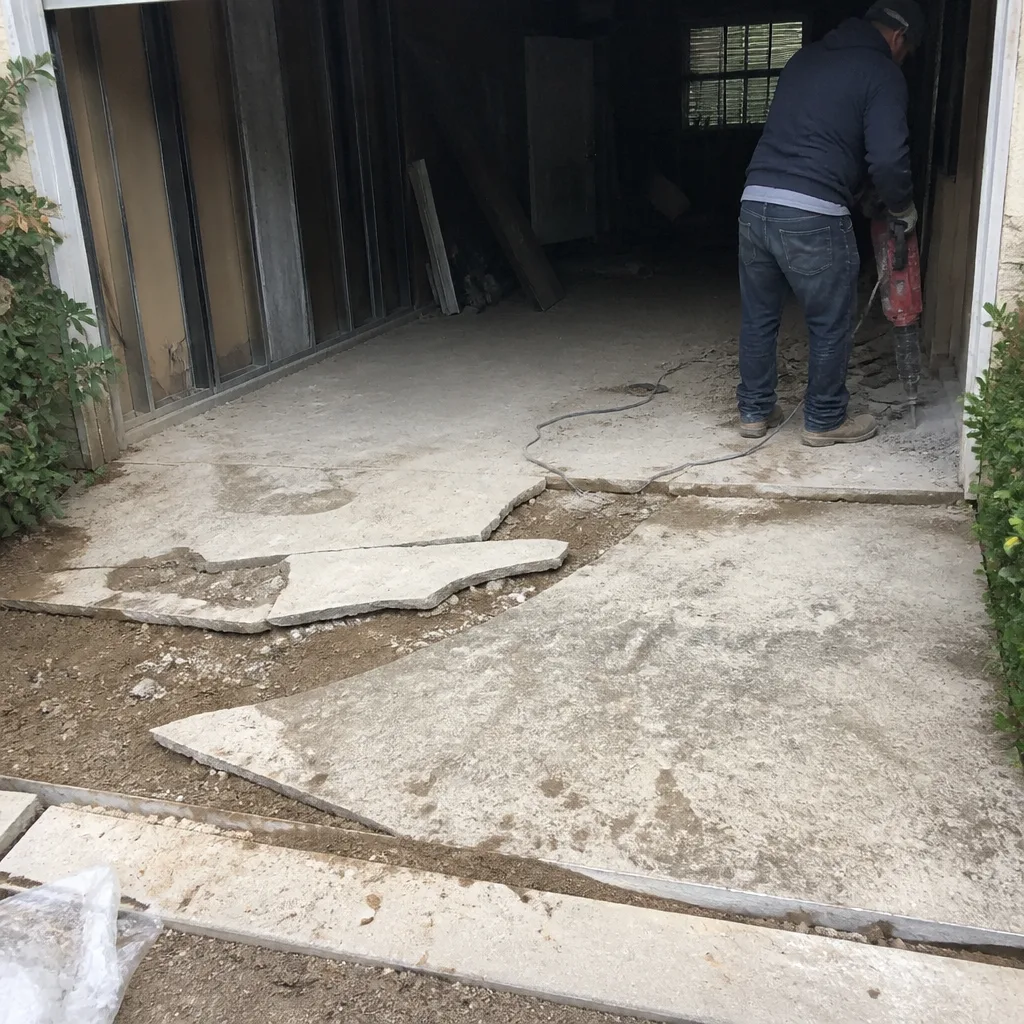 Before
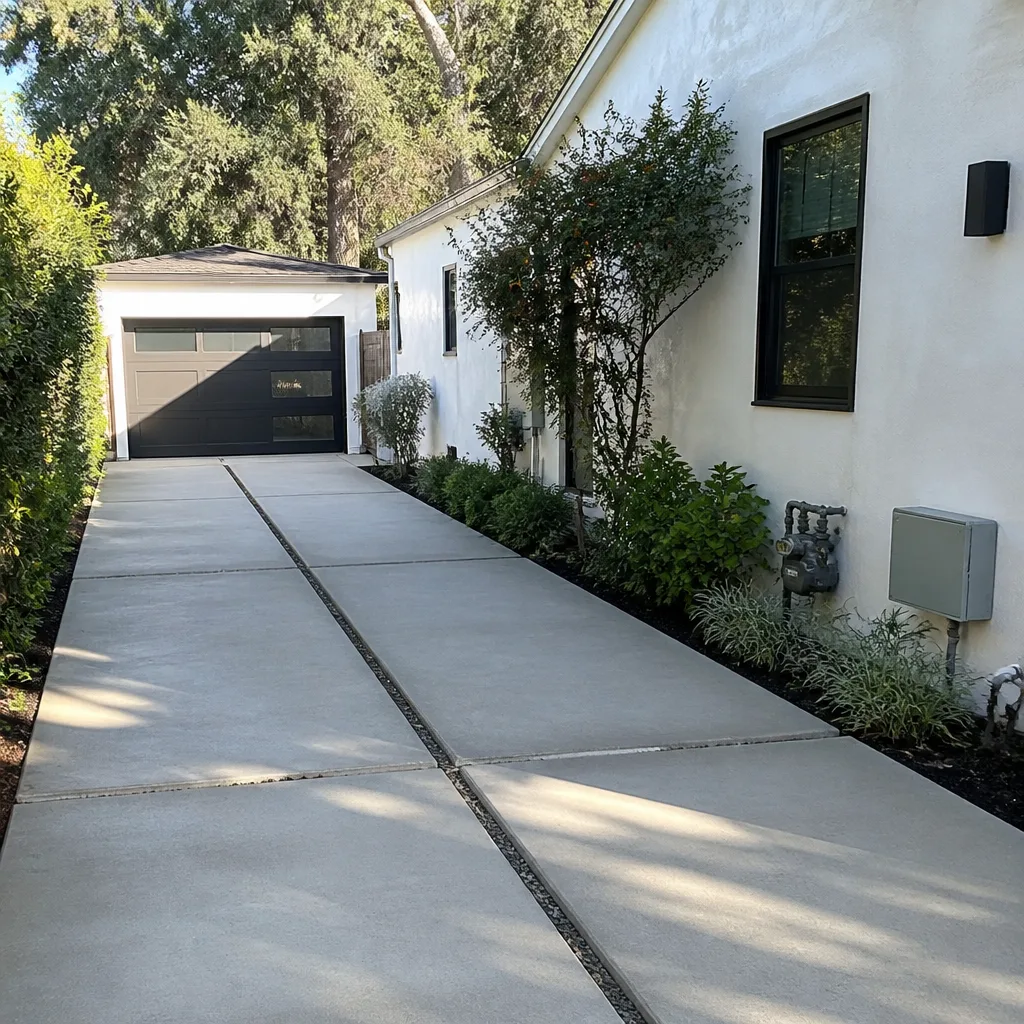
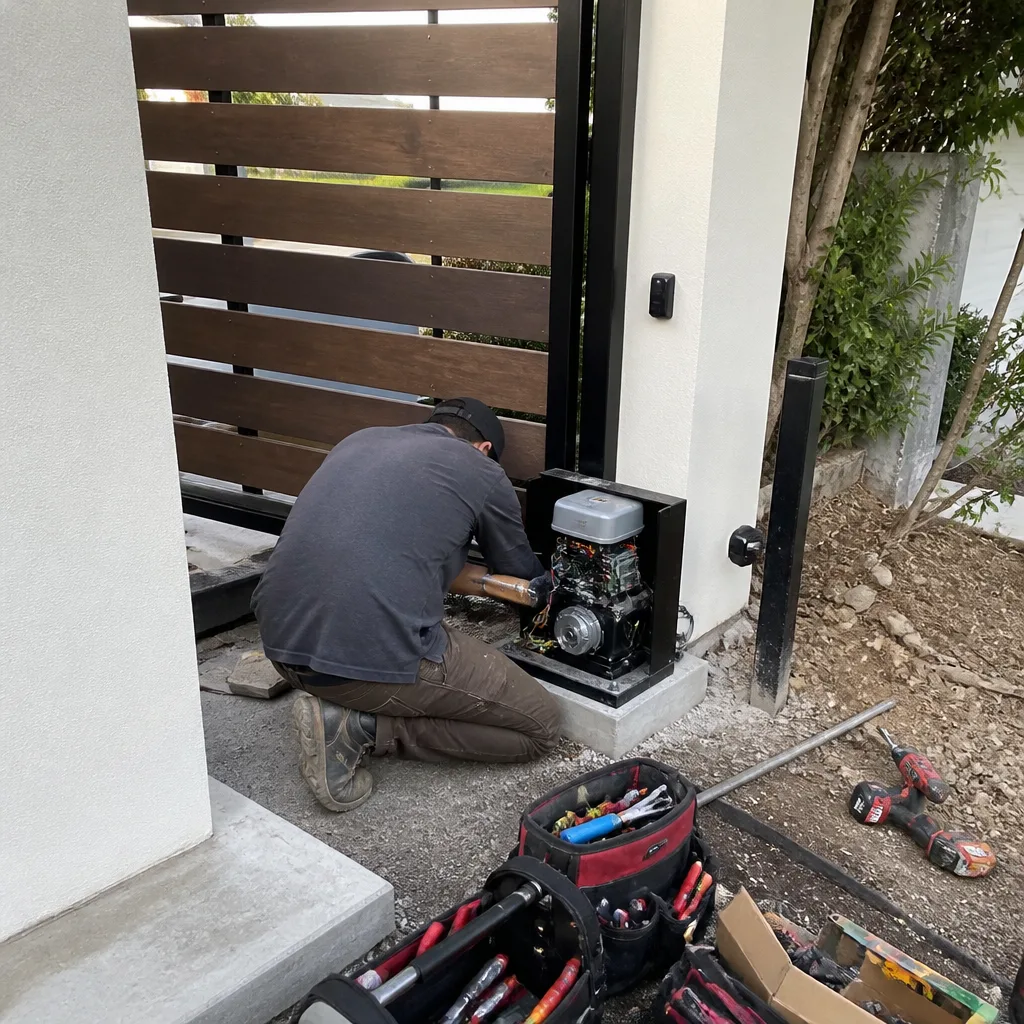 After
After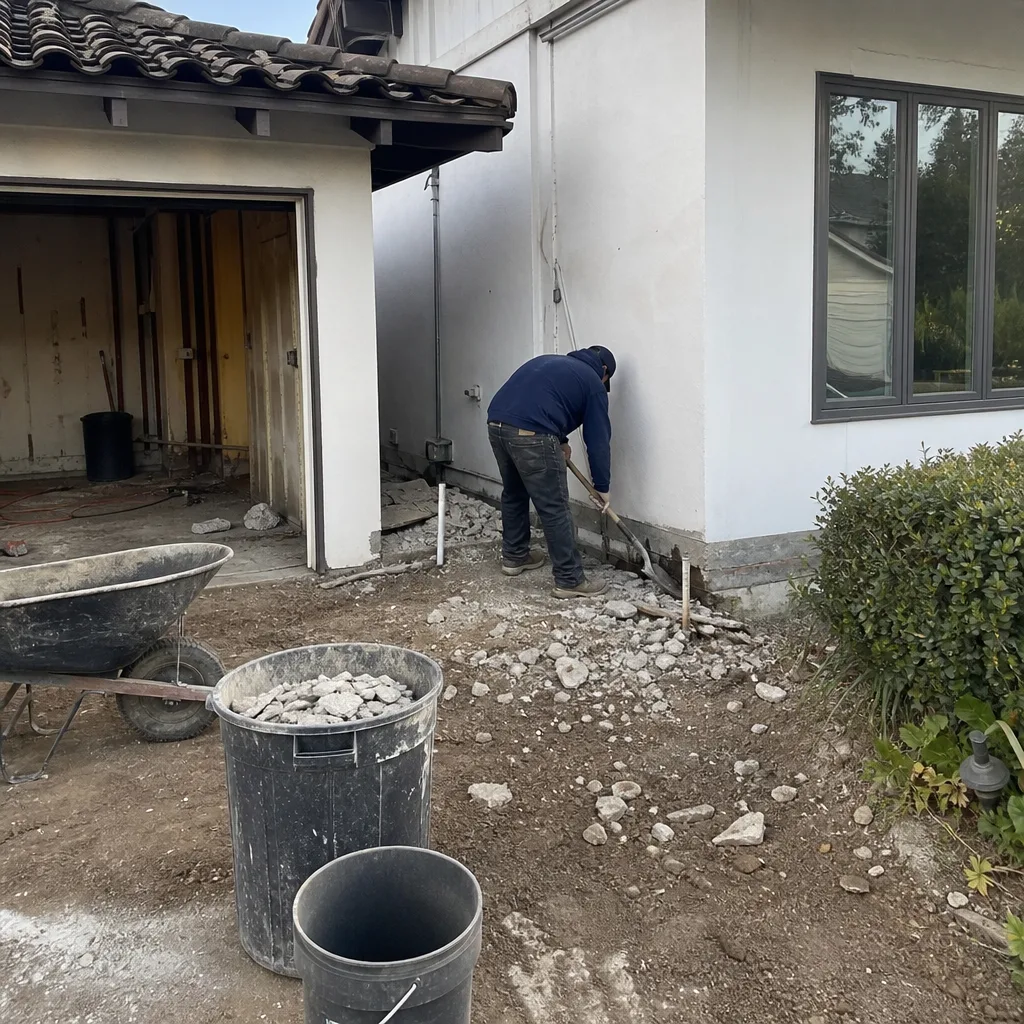 Before
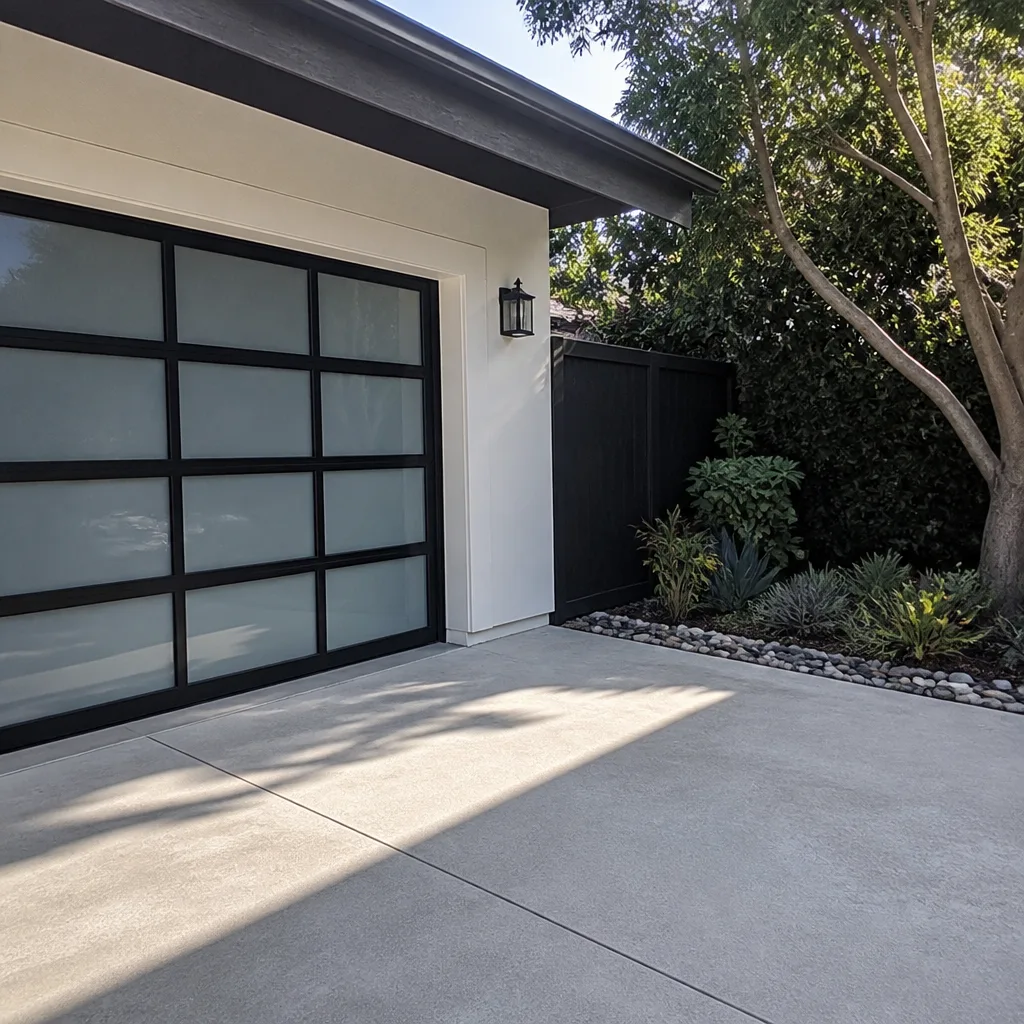 After
After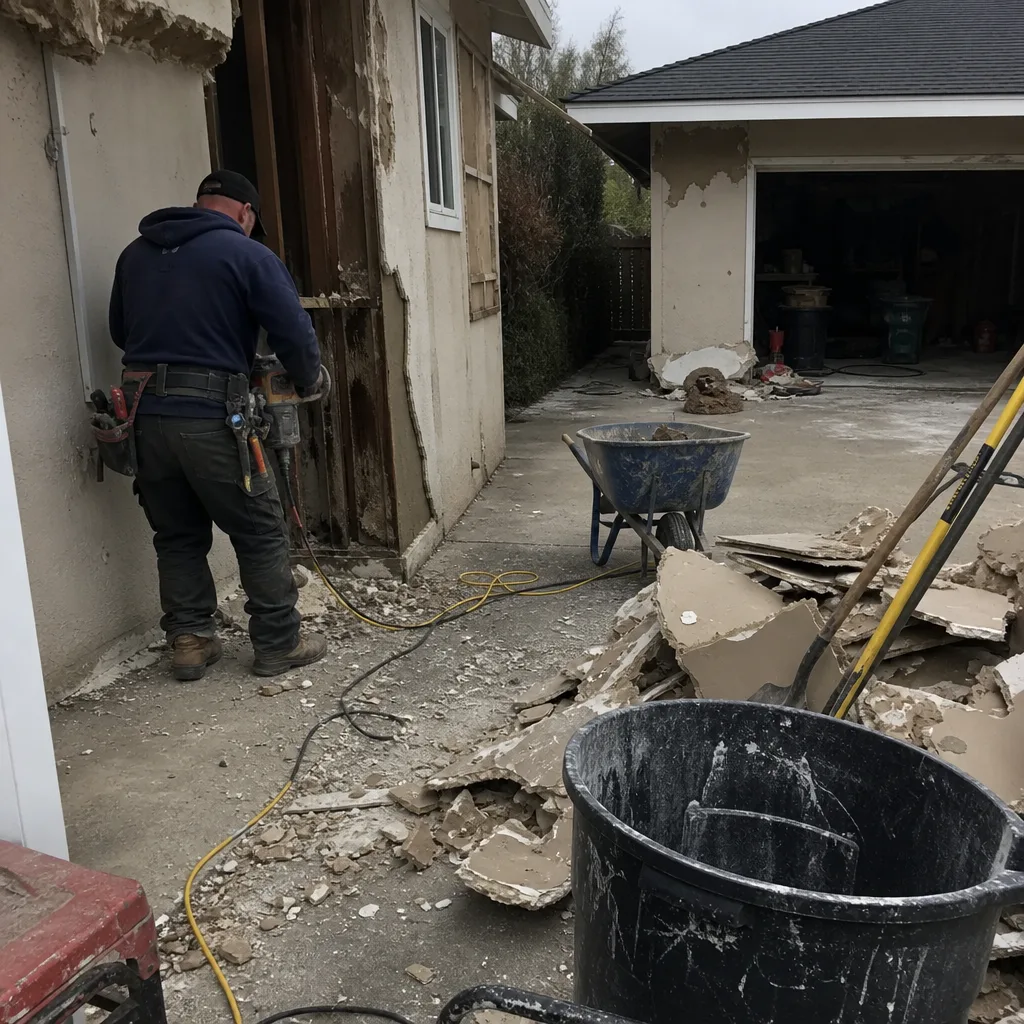 Before
 After
After